

Sound Waves: DIY Harmonica - STEAM Lesson
STEAM activities use hands-on learning—like building, experimenting, and exploring—to boost critical thinking and creativity. For children and siblings facing pediatric cancer, these activities are more than just schoolwork; they bring back a feeling of normalcy, success, and confidence during a difficult time.
STEAM education helps kids learn vital skills, connect with others, and have fun! These at-home STEAM activities let children and siblings facing pediatric cancer explore Science, Technology, Engineering, Art, and Math in a fun, comfortable setting.
Age Group Best Served: K-8
Child/Adult Ratio: 6 to 1
Take Away Artifact: Yes
Approximate time: 45 minutes
Divisions Covered: All
Materials:
For the group: Tuning forks, ping pong balls on s string, pan of water, plate with sprinkles, Slinky toys (2), Cup phone (two cups connected by a string)
Per student: plastic straws cut into 1 inch pieces (4 per student), tongue depressors (2 per student) thick rubber band (1 per student) thin rubber bands (2 per student)
Skills Required for Completion of Task:
Motor skills
- Bilateral upper extremity coordination
- Ability to manipulate small objects
- Hand-eye coordination
- Ability to grip objects
- Ability to stabilize objects/task
Process/Cognitive skills
- Ability to attend to task for greater than 5 minutes
- Follow multi-step directions
- Ability to sequence steps
- Ability to understand safety precaution
- Ability to organize or keep materials organized for task
- Ability to adjust to different workspace requirements
Social skills
- Ability to communicate and share equipment with peers/staff appropriately
K-8 Standards:
2.PS4: Waves and Their Applications in Technologies for Information Transfer 1) Plan and conduct investigations to demonstrate the cause and effect relationship between vibrating materials (tuning forks, water, bells) and sound. 2) Use tools and materials to design and build a device to understand that light and sound travel in waves and can send signals over a distance. 3) Observe and demonstrate that waves move in regular patterns of motion by disturbing the surface of shallow and deep water.
Simple Science:
Sound is the energy produced by vibration. When you bang a drum, the boom sound comes from the drum surface vibrating at very high speed – so fast you can’t even always see it move!
The vibration carries through the air and into your ear. Once your eardrum starts to vibrate, the brain interprets that vibration as sound.
When you blow into your harmonica, the straws and rubber bands start to vibrate from the force of your breath, causing the sound you hear.
This activity would be appropriate completed by the following disciplines:
Occupational Therapy, LCSW, Family Services
Instructions:
Divide the students into two groups. Model how to use the materials and explain the Sound wave infographic below.
Group 1 - Sound Waves
Have students experiment with multiple tuning forks by striking them on the table and:
- Listen to the sound
- Feel the vibration with hands
- Move the ping pong ball on string
- Move the water
- Move the sprinkles
Have students create long and short sound waves with the slinkys and use the cup phone to talk to one another. (note: string must be held straight and tightly for cup phone to function)
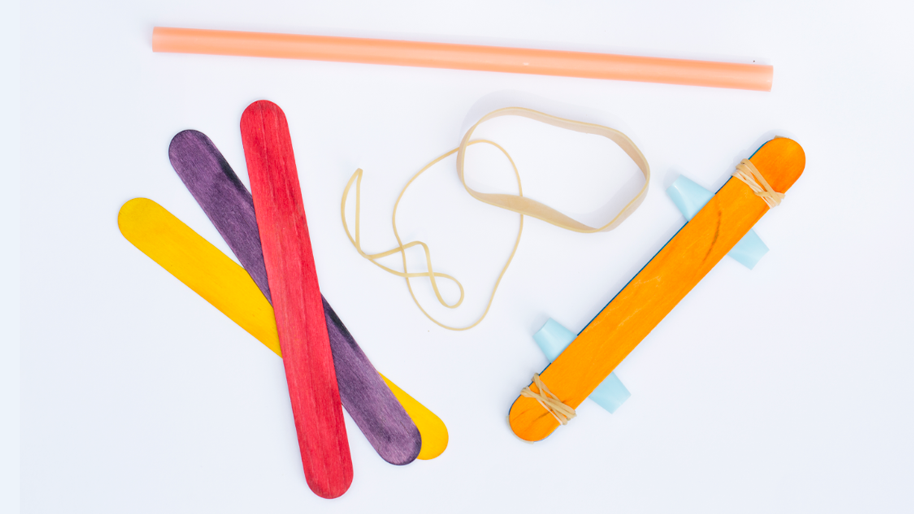
Group 2: Build a Harmonica
What you’ll need:
- 2 popsicle sticks or craft sticks
- 1 wide rubber band
- 2 smaller rubber bands
- a plastic straw
- Cut two approximately 1 inch pieces off the end of your straw
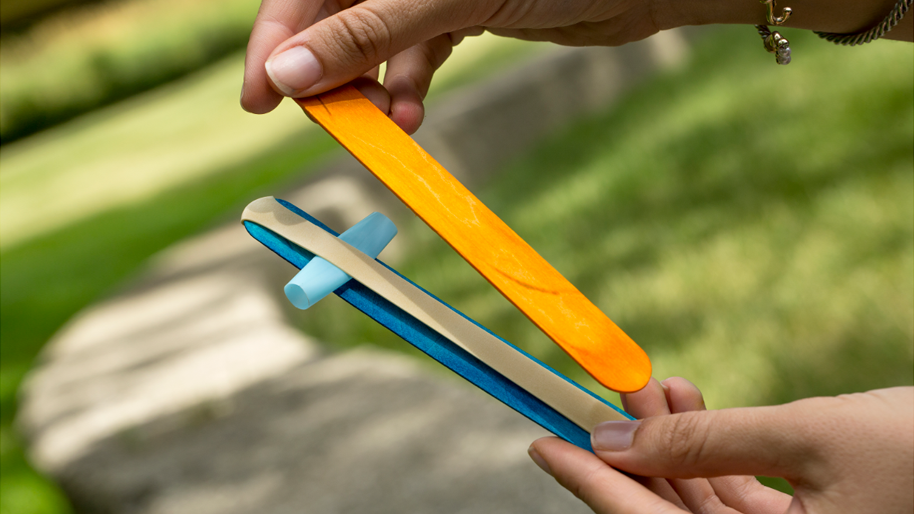
- Wrap the wide rubber band lengthwise around one popsicle stick
- Take one piece of straw and tuck it under the rubber band on one end of the popsicle stick
- Place the other piece of straw on top of the rubber band on the other end of the popsicle stick
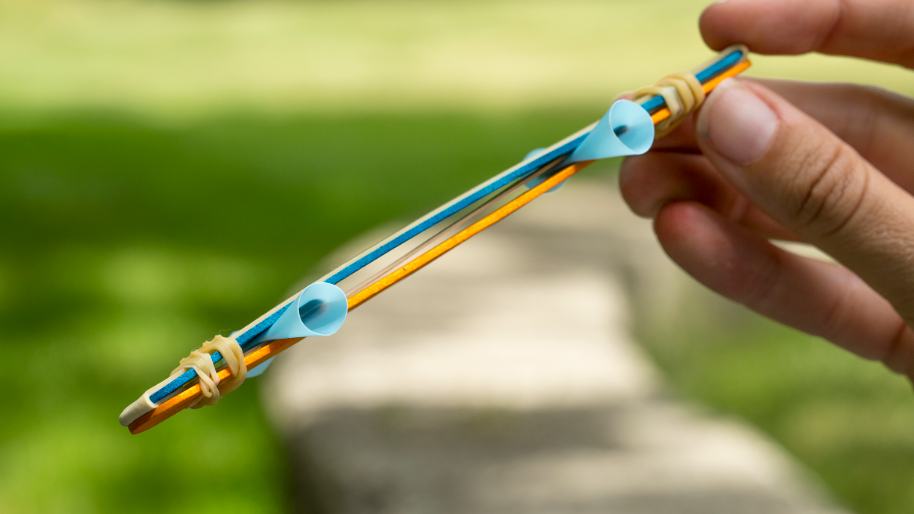
- Place your other popsicle stick on top, and wrap a small rubber band around each end of the popsicle sticks
- Blow into your harmonica, just like you would a real harmonica! It’s tempting to think you need to hum, like with a kazoo, but a simple blow will do the trick!

The Austin Hatcher Foundation is a nationally recognized leader in psycho-oncology care, providing innovative, evidence-based services for families facing pediatric cancer. Through a holistic approach, the Foundation supports the emotional, mental, and social well-being of children, siblings, and parents—ensuring families have the resources to heal and thrive during and after treatment.
Through programs like STEAM Club and at-home resources like these, we encourage creativity, build confidence, and strengthen connections through hands-on learning. To learn more about our programs or to request comprehensive support, visit https://www.hatcherfoundation.org/resources/request-an-appointment

.png)